Indar Pet
How to Transition Your Dog or Cat onto a Dietary Food (Renal, Urinary and Other Clinical Diets)

May
When a dog or cat is diagnosed with a medical condition, nutrition often becomes a central part of their long-term care plan. Dietary foods — also known as clinical or veterinary diets — are specially formulated to support conditions such as kidney disease, digestive disorders, urinary issues, or liver disease.
These diets are complete, balanced, and scientifically designed to meet medical needs while remaining suitable for long-term feeding. However, the main challenge for many pet owners is not the diet itself, but the transition process.
Why Dietary Foods Are Important
Clinical diets are formulated to support specific health requirements, such as:
- Supporting kidney function with controlled phosphorus and protein levels
- Promoting digestive health with highly digestible ingredients
- Supporting urinary health through mineral and pH control
- Reducing liver workload with adjusted nutrient profiles
For these benefits to be effective, the pet must eat the diet consistently.
Why Pets Often Refuse a New Diet
It is very common for dogs and cats to initially reject a new dietary food. Reasons may include:
- Sudden change in flavour or texture
- Different protein or fat sources
- Lower palatability compared to previous food
- Stress related to illness or routine changes
- Sensitivity to dietary transitions, especially in cats
- Reduced appetite due to underlying health issues
This usually indicates the need for a slower transition, not that the diet is unsuitable.
The Importance of a Gradual Transition
A sudden switch can lead to:
- Food refusal
- Reduced calorie intake
- Weight loss
- Stress and food aversion
- Inconsistent eating habits
A gradual introduction allows both digestive and behavioural adaptation.
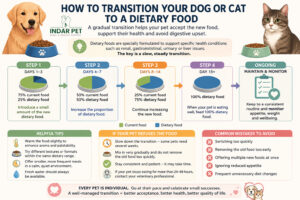
Step-by-Step Transition Plan
Days 1–3
Start with 75% current food and 25% dietary food.
Days 4–7
Move to a 50/50 mix, monitoring appetite and tolerance.
Days 8–14
Increase to 75% dietary food and 25% current food.
After Day 14
Transition to 100% dietary food if your pet is eating comfortably.
Some pets, especially cats, may require a longer transition period.
If Your Pet Refuses the New Food
Try the following adjustments:
- Warm the food slightly to enhance aroma
- Experiment with texture (wet, dry, pâté, chunks)
- Offer smaller, more frequent meals
- Feed in a quiet, low-stress environment
- Slow down the transition process
If your pet stops eating completely, veterinary advice should be sought promptly.
Choosing a High-Quality Dietary Food
Not all dietary foods are the same, and selection plays an important role in long-term health management. The focus should always be on nutritional quality rather than branding or marketing.
A high-quality clinical diet should offer:
- Transparent and clearly listed ingredients
- Veterinary-formulated nutritional balance
- Appropriate digestibility for the condition
- Consistent quality control standards
- Evidence-based formulation
Understanding ingredient lists is essential, as marketing claims do not always reflect nutritional suitability. Some lesser-known veterinary diets may be more precisely formulated than heavily advertised alternatives.
Long-Term Success
Once your pet has successfully transitioned:
- Maintain a consistent feeding routine
- Monitor appetite, weight, and body condition
- Ensure constant access to fresh water
- Avoid unnecessary diet changes
- Follow veterinary guidance for ongoing adjustments
- Choose diets based on nutritional suitability, not popularity
Final Note
Transitioning onto a dietary food is both a nutritional and behavioural process. Patience and consistency are key to success.
The goal is not only to provide appropriate medical nutrition, but to ensure your pet eats it comfortably and consistently for long-term health benefits.
Is your cat or dog starting a dietary food, or struggling with the transition?
