Indar Pet
IRIS CKD Guidelines for Cats and Dogs: What Your Pet’s Kidney Disease Stage Means
Mar
When your vet tells you your dog or cat has stage 1, 2, 3, or 4 chronic kidney disease (CKD), it can feel confusing — and even alarming.
Many pet owners (and yes, even we at Indar Pet) feel lost at first. What do these stages actually mean?
The good news
The good news is that, although CKD is progressive, understanding the staging system makes everything clearer.
It helps you understand:
- what is happening inside your pet’s body
- what tests are being performed
- and what you can do to support them
What is the IRIS Staging System?
Veterinarians often use the IRIS (International Renal Interest Society) staging system to classify CKD.
This system is mainly based on blood and urine tests, including:
- Creatinine – shows how well the kidneys filter waste
- SDMA – detects early kidney changes
- Urine protein – indicates if protein is leaking into the urine
The stages range from 1 to 4.
Stage 1 shows very early changes, while stage 4 indicates advanced disease.
Understanding Each Stage
Stage 1: Early kidney changes
- Kidney function is still mostly normal
- Blood tests may appear normal
- However, SDMA can show early changes
- There are usually no obvious clinical signs
👉 Goal:
- Early detection
- Regular monitoring
- Maintain kidney health
Stage 2: Mild CKD
- Creatinine and other markers are slightly elevated
- Subtle signs may appear, such as increased thirst or urination
Goal:
- Start dietary management
- Support hydration
- Monitor regularly
Important:
Many owners feel anxious at this stage. However, stage 2 is still very manageable.
Stage 3: Moderate CKD
- Kidney function is clearly reduced
- Clinical signs become more noticeable
For example:
- reduced appetite
- weight loss
- fatigue
Goal:
- Adjust diet more strictly
- Consider medications or supplements
- Increase vet check-ups
This stage requires more effort. However, treatment can still slow progression and maintain quality of life.
Stage 4: Advanced CKD
- Kidney function is severely reduced
- Clinical signs are more serious
These may include:
- nausea
- vomiting
- severe weight loss
- dehydration
Goal:
- Provide intensive support
- Use specialised diets
- Administer fluids and medications
This stage can feel frightening. However, with proper care, pets can still enjoy a good quality of life.
Why do people feel confused?
Many owners struggle with CKD staging. This happens for several reasons:
- The numbers can feel like a countdown
- Veterinary terms may be unfamiliar
- Pets often appear healthy in early stages
For example, a pet in stage 1 or 2 may look completely normal.
Because of this, the diagnosis can feel more serious than it actually is.
What to expect from your vet
Once your pet is staged, your vet will usually:
- Repeat blood tests regularly
- Perform urine tests to check protein levels
- Discuss diet and hydration
- Recommend supplements or treatments if needed
In addition, treatment plans are tailored to each stage.
The goal is always to slow progression and maintain wellbeing.
Key takeaways
- CKD stages are not a sentence — they are a guide
- Each stage helps determine the best care approach
- Early detection gives the best chance of support
- Understanding the stages helps you feel more in control
Closing encouragement
If your pet has been diagnosed with CKD, remember: you are not alone.
There is a lot you can do at every stage. With the right support, many pets continue to live happy and comfortable lives.
And remember — everything you need to support your pet is here:
- nourishing broths
- specialised renal diets
- hydration aids
- urine collection supplies
- home creatinine tests
All designed to help your pet feel their best.
Do you know what stage your dog or cat is in? Tell us — we’d love to hear your experience!
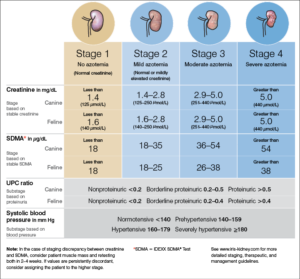
Photo courtesy of www.idexx.co.uk
Why SDMA matters
Click on the name to see how acting on IDEXX SDMA Test results helped Bess, Jimmy, Scarlet and Zeke.




Images and information courtesy of www.idexx.co.uk